Join
Join  Donate
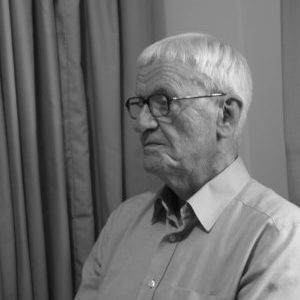
 Arnold Whittall, Professor Emeritus at King’s College, University of London, died on May 26, 2026. Best known for writings on nineteenth- and twentieth-century music, British composers, and Schoenberg, he also published frequently on opera and on a formidable range of contemporary composers. His scholarly articles and twelve books spanned six decades, accompanied by a seemingly effortless flow of critical reviews of books, scores, and recordings, notably for Musical Times, Music & Letters, and The Gramophone. Whittall was a scholar of unusually wide interests; he was also a public intellectual whose advocacy of new music reached a large radio audience over BBC broadcasts in the 1970s and 80s.
Arnold Morgan Whittall was born in 1935 in Shrewsbury, England, where he attended Priory Grammar School. After National Service, he read History and Music at Emmanuel College, Cambridge (B.A. 1959), completing a Ph.D. dissertation (1964) on “La Querelle des Bouffons.” He began his teaching career in Cambridge, moving to the University of Nottingham in 1964, and to Cardiff University in 1969. In 1975 Whittall joined the King’s London faculty as Reader in Music, becoming Professor of Musical Theory and Analysis in 1982 (the first such chair in Britain). He was a co-founder of the journal Music Analysis, and Visiting Professor at Yale in 1985. Amid the disciplinary debates of 1980s musicology Whittall’s erudite synthesis of structural and hermeneutical thought made him a leading British voice. He retired from teaching in 1996 to pursue a busy schedule of writing and editing. Having launched the book series “Music in the 20th Century” at Cambridge University Press, he oversaw publication of some sixty titles over three decades.
Whittall’s first three books—Schoenberg Chamber Music (1972), Music Since the First World War (1977), and The Music of Britten and Tippett (1982)—announced a cluster of interests in European-American modernism, tonal and post-tonal analysis, and the history of British music. In his Cambridge Introduction to Serialism (2008), he aligned fluent technical perspectives with detailed commentary on dozens of composers working in ten national traditions. He collaborated on an English edition of Boulez’s Collège de France lectures, and with his wife Mary Whittall (who died in 2005), on translations from German musicology. Whittall’s intelligence as a writer on dramatic music informed his entries on Britten for the New Grove Dictionary of Opera (1992) and his collection The Wagner Style (2015). In British Music After Britten (2020) he gathered seminal essays on post-1970 repertoire, giving special emphasis to complexity and spectralism as stylistic directions.
Whittall’s writings were adventurously dialectical rather than polemical in tone. He deftly matched a vivid cultural-historical narrative to crystalline descriptions of musical gesture. His fascination with modernism and classicism as paired conceptual archetypes—whether writing about Sibelius or Maxwell Davies—was one common thread. By sheer intellectual curiosity, he drew ideas and people together. His uncanny ability to keep up with the latest scholarship runs through his final book, Schoenberg: “Night Music” (published in 2024). Whittall’s honors included the British Academy’s Derek Allen Prize (2013), the Pascall Medal of the Society for Music Analysis (2021), and Honorary Membership of the Royal Musical Association (2014).
In person, Arnold was known for his immense kindness and generosity. A witty correspondent by letter or email, he cultivated an ever-widening social circle at home and abroad. London visitors could look forward to a warm welcome and an inspiring chat, at a concert or over dinner. Arnold the scholar and mentor was admired by generations of colleagues, students, composers, performers—and by his friends. We are deeply indebted to him.
–Philip Rupprecht
Related News