Join Our Mailing List

In summer 2026, the American Musicological Society (AMS) will host a two-week residential Institute for Higher Education Faculty entitled Studying Early Music with Computers: Tools, Formats, and Strategies, to be held at New York University, 14 – 27 July 2026. This institute is a new project and will apply insights from recent scholarship in humanistic music studies (musicology, music theory, music analysis, etc.) and digital humanities to organize an innovative program for the machine-assisted study of medieval, Renaissance, and Baroque Music. It will bring together an interdisciplinary group of leading scholars and teachers engaged in using computers to do research on music history and theory and who are actively involving students in their projects.

Studying Early Music with Computers: Tools, Formats, and Strategies will support thirty (30) participants and consist primarily of practitioner workshops and seminars on specific tools, formats, and machine-assisted investigative strategies. Through both expert talks and interactive workshops, participants will be equipped with the knowledge needed to advance their own research and teaching, including detailed explorations of the technical, infrastructural, and funding requirements necessary for conceiving, developing, deploying, and maintaining digital humanities projects and programs for the study of early music (c. 1000–1750 CE). Each participant will receive a stipend of $2200 to support attendance and travel, as well as access to reduced-rate dorm accommodations for the duration.

Studying Early Music with Computers: Tools, Formats, and Strategies will be directed by Julie E. Cumming and Richard Freedman, and will feature workshops and seminars facilitated by Chris White, Reba Wissner, Jennifer Bain, Karen Desmond, Ichiro Fujinaga, Debra Lacoste, Cory McKay, Emiliano Ricciardi, Craig Sapp, and Martha Thomae.

The Studying Early Music with Computers: Tools, Formats, and Strategies Summer Institute has been made possible in part by a major grant from the National Endowment for the Humanities: Democracy demands wisdom.

 

Applications & Eligibility

To participate in the 2026 AMS Summer Institute Studying Early Music with Computers, you must submit an application by 6 March 2026. Application and eligibility details are provided on the institute website.

Apply Now


Institute Directors

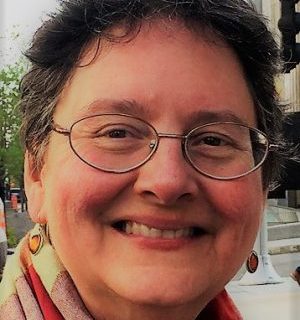
Julie Cumming
Institute Co-director

Julie Cumming is a full professor in musicology, McGill University, Schulich School of Music. She is the author of The Motet in the Age of Du Fay (Cambridge University Press, 1999). She has published articles and reviews in Speculum (the journal of the Medieval Academy of America), the Journal of Musicology, New Grove Opera, and Early Music, as well as in numerous edited collections, including the Cambridge History of Fifteenth-Century Music.

Her current work looks at compositional process and improvisation for Renaissance polyphonic music, and digital humanities in music. She was the principal investigator (PI) of an international (US, Canada, EU) Digging into Data Challenge Grant, “Electronic Locator of Vertical Interval Successions (ELVIS): The first large data-driven research project on musical style” (2012-2014). She was the co-leader (with Ichiro Fujinaga, McGill, PI) of a SSHRCC (Social Sciences and Humanities Research Council of Canada) Partnership Grant, SIMSSA: Single Interface for Music Score Searching and Analysis. She is a co-investigator on the SSHRC Partnership Grant, LinkedMusic, Ichiro Fujinaga, PI, on searching metadata for music information in online databases from all over the world from a single interface, and co-investigator and axis leader on the SSHRC Partnership Grant, Digital Analysis of Chant Transmission (DACT), Jennifer Bain, Dalhousie University, PI.

Cumming has received multiple awards for graduate teaching. She currently has 8 graduate students (4 PhD, 2 MA, and 2 DMus). She has supervised 6 Postdoctoral scholars, 24 PhD dissertations, 22 MA students, and 8 DMus students in music performance. Cumming has also played multiple roles in the American Musicological Society and currently serves as the AMS President.

Richard Freedman
Institute Co-director

Richard Freedman is Professor of Music and John C. ’43 Whitehead Professor of Humanities at Haverford College (USA). He is the author of two books: The Chansons of Orlando di Lasso and their protestant listeners: music, piety, and print in sixteenth-century France (Rochester, 2001), and Music in the Renaissance, 2, vols. (New York, 2012; also available in Spanish translation via Akal publishers [2018]). He is also general editor (with Prof Jeanice Brooks) of A Cultural History of Music in the Renaissance, A Cultural History of Music, 3 (London, 2023), as well as many essays in leading journals and encyclopedias.

He is also a leader in digital musicology, having served as Digital and Multimedia Scholarship Editor for the Journal of the American Musicological Society, as Chair of the Digital and Electronic Media Committee for the Renaissance Society of America, and as member of the Board of Directors of Répertoire International de Littérature Musicale.

He directs two major digital music scholarship projects: The Lost Voices Project and Citations: The Renaissance Imitation Mass and is developer and director of CRIM Intervals, a Python library for music analysis, and an extensive body of classroom tutorials for digital learning and research: Encoding Music.