
 Join
Join  Donate
 The AMS is pleased to announce the results of the 2026 Board and Council election. The following individuals have been elected to the indicated Society offices. These newly-elected Board and Council members will formally begin their service in November 2026. Congratulations to our newly-elected Board and Council members and thanks to all those who stood for election!
Board of Directors
Ryan Dohoney, Director-at-Large
Ryan Dohoney serves as Professor of Musicology and Associate Dean for Faculty in the Bienen School of Music at Northwestern. At Northwestern he is also affiliate faculty in the programs in Comparative Literary Studies, Critical Theory, Gender & Sexuality Studies, and the Black Arts Initiative. He has previously served the Society as a member of the Council (2020–2023), the Pisk Prize Committee (2016–2019), the AMS Fellowship Committee (2023–2026), and the Committee on the Status of Women and Gender (2019–2022). Dohoney also served as chair of the LGBTQ Study Group (2012–2015). He is committed to working with the society’s members and staff to ensure that the AMS functions as an unparalleled resource for its members while it opens up vibrant spaces for the exchange ideas about what music does in the world.
Degrees: PhD, Columbia University; BMus, Rice University.
Research Areas: U.S. and European modernism and experimentalism in the twentieth and twenty-first centuries; music, collectivity, and friendship through the artistic world of Morton Feldman; the experimental music community Wandelweiser; Julius Eastman.
Publications: Saving Abstraction: Morton Feldman, the de Menils, and the Rothko Chapel (Oxford, 2019); Morton Feldman: Friendship and Mourning in the New York Avant-Garde (forthcoming).
Awards: Paul Sacher Foundation; the American Council of Learned Societies; the American Philosophical Society; Faculty Research Grant (The Graduate School at Northwestern University).
Administrative Experience: Associate Dean for Faculty and Director of Graduate Music Studies (Bienen School of Music, Northwestern University).
AMS Activities: Council (2020–2023); Pisk Prize Committee (2016–2019); Fellowship Committee (2023–2026); Committee on the Status of Women and Gender (2019–2022); Chair, LGBTQ Study Group (2012–2015).
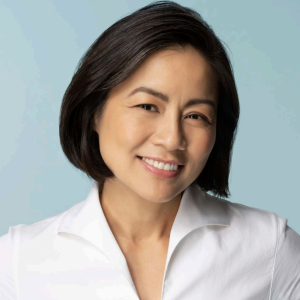
Tiffany Kuo, Director-at-Large
Tiffany Kuo envisions an AMS that draws strength from the full breadth of the musical landscape. Her perspective is grounded in the daily realities of the diverse communities she serves. At a California community college of more than 70,000 students — including first-generation, veterans, and formerly incarcerated learners — she witnessed firsthand how music functions as a meaningful cultural lifeline. At a music conservatory, Kuo leads graduate seminars in labor relations, public policy, and philanthropy, examining the forces that quietly sustain our field. Her public musicology work with performing arts institutions further transforms scholarly inquiry into shared community experience. She wishes to bring to the Board a commitment to a Society that is intellectually rigorous, economically aware, and deeply responsive to the multifaceted populations defining the future of musicology.
Degrees: PhD, New York University; MM, The Juilliard School; BA and BS, Stanford University
Research Areas: Philanthropic patronage as foundational to American arts policy since the mid-twentieth century.
Publications: “A New Patronage Model in Postwar America” in Revisiting the Historiography of Postwar Avant-Garde Music (Routledge, 2023); articles in Dramaturgie Musicale Contemporaine en Europe, Mitteilungen der Paul Sacher Stiftung, The Juilliard Journal, and Molecular and Cellular Biology
Awards: California Community Colleges Chancellor’s Office grant titled, “Culturally Responsive Pedagogy & Practices: Innovative Best Practices.”
Administrative Experience: Chair, Mount San Antonio College Music Department (2014–2018); faculty
data coach coordinator for Mt. SAC Title V Grant “Creating and Equity-Minded Campus Culture to Improve Student Outcomes”; affiliated scholar of Los Angeles Opera; served on the board of the Arts District Los Angeles Business Improvement District.
AMS Activities: Council (2019–2022); Journal of the American Musicological Society Editorial Board (2024–current); Committee on Career-Related Issues (2018–2022, chair 2020–2022); Membership and Professional Development Committee (2020–2022); Development, Donor Outreach and Awards, Grants, Fellowships Task Force (2020–2021)
Council
Alex Bádue has been an active member of the AMS for eighteen years. As an assistant professor in a small liberal arts college, he is deeply committed to undergraduate teaching, mentorship, and the cultivation of intellectual community. He has served in committees at the Society for American Music and the AMS, including the AMS Midwest Chapter. At his institution, he has served on committees that have given him valuable insight into curricular challenges, as well as others dedicated to supporting and funding artist-scholars. Bádue’s experience organizing conferences and serving on institutional committees has given him practical insight into academic governance, strategic planning, and collaborative decision-making. Having been an active participant in the AMS as both an international graduate student and an early-career scholar, he understands what individuals in these phases of their careers need and expect from an academic society, and he will be happy to represent them.
Christa Bentley is an Assistant Professor at the University of Arkansas who researches American folk and popular music. She has experience at a large, state university as well as a previous position at a small, private university in Oklahoma. She will bring these perspectives to the AMS Council, having seen the challenges facing different types of institutions as well as how national challenges across higher ed are playing out in this region. She is an active member of the popular music study group and is interested in how the society can continue to support the work of study groups. Bentley has also benefited from the AMS’s support through special events including the Many Musics of America grant and the Telling Our Stories institute. She sees serving on the Council as a way of giving back to the society, to help promote these opportunities, and to help shape how the AMS supports members’ work.
Gwynne Brown is a professor of musicology at the University of Puget Sound, a small private liberal arts college in Tacoma, Washington. She is a white scholar and pianist whose research has explored how Blackness and understandings of musical genre have intertwined in 20th-century American music. Having benefited greatly over the years from the generous mentorship of other scholars, she is eager to welcome and support those who are new to, or feel uneasy in, the AMS. Coming from a small college where connections with faculty across disciplines are easy to nurture, she is interested in fostering connections between musicology and other fields within music and beyond. Brown is committed to using her voice in service of equity, accessibility, and humanity in academia, musicology, and the AMS. She previously served on the AMS Council 2016–2019; she has also served on the Howard Mayer Brown Fellowship Committee, 2021–2025, chairing in 2024 and 2025.
Maria Cizmic is an associate professor in the Humanities and Cultural Studies Department at the University of South Florida. She integrates her areas of research expertise regarding music in Eastern Europe, trauma and disability, popular music, and film music into her department’s interdisciplinary degree programs in Film, Humanities, and American Studies. As associate professor, she works with her department to negotiate the ongoing challenges that higher education faces in Florida and has honed her leadership and organizational skills by serving as her department’s Graduate Advisor, on numerous search committees across the university and School of Music, and on USF’s Tenure and Promotion Committees. Cizmic has served on the AMS Southern Chapter’s program committee and appreciates the commitment that the Society’s members devote to the AMS. She brings the perspective of a music scholar who continues to speak to music studies while working in an interdisciplinary, humanities structure at a large state institution.
Matthew Franke brings to the Council the perspective of a mid-career, full-time, non-tenure-track professor as a senior lecturer in music history at Howard University in Washington, D.C. He has previously served as a member of the AMS’s Committee on Communications (2018–2021) and as the secretary of the AMS Capital Chapter (2020–2024); these experiences shaped his belief that the AMS needs leaders who are committed to serving the membership. Another formative experience has been his work as a union organizer and departmental representative for SEIU Local 500 at Howard University (2022–present); he is particularly interested in working to make the AMS a welcoming and supportive environment for all members, regardless of their employment status or relationship to the academy. Finally, Franke’s scholarly work on open-access publishing has provided him with connections to librarians and publishers that may help the AMS disseminate its message.
John Kapusta is currently an assistant professor of musicology at the Eastman School of Music of the University of Rochester. He is a historian of music and culture with a focus on the postwar United States. Before completing his PhD, he studied voice and performed solo roles with the Houston Grand Opera and other companies. In his academic career, Kapusta has held both term-based contract and tenure-track faculty positions. Because of this experience, he is particularly concerned about promoting economic security and academic freedom for all faculty. To that end, he has served as an elected member of the University of Rochester’s Faculty Senate and participated in its chapter of the AAUP. Kapusta believes humanities teaching and research is essential to our democracy. He wants to help the AMS continue to promote the study of music in all its forms.
Malachi Komanoff Bandy is an assistant professor of music at Pomona College (CA), where he teaches survey-style courses and seminars, primarily to non-majors, on pre-1750s musical symbolism, rhetoric, and queer expression. As (also) an active performer, studio musician, and passionate educator of adult early-music amateurs, his scholarly perspective merges theory and practice, whether in or beyond my small liberal-arts college environment. He therefore invest in learning communities that value multidisciplinary inquiry, having recently served on committees and organized panels for the Society for Seventeenth-Century Music, the International Society for the History of Rhetoric, the Renaissance Society of America, and the AMS Pacific Southwest Chapter. As a queer junior faculty member whose career constantly blends research and performance, Komanoff Bandy experientially understand the challenges of existing between and across societal boxes. He aims to bring to the Council a sincere belief that doing good work collaboratively, with kindness, enlivens and sustains a musical community.
Jacob Kopcienski is an Assistant Professor of Musicology at Appalachian State University, bringing the perspective of a junior scholar at a rural, public institution in the South. His sensitivity to the diverse methodologies, research subjects, positionalities, and ethical commitments of the AMS membership is informed by his experience as a white, disabled, queer scholar using interdisciplinary community-engaged research methods (archival, ethnography, and popular music/media studies). Through his research with queer/trans, African American, and working-class communities throughout Appalachia, Kopcienski has built substantial relationships with performers, community organizations, and related academic societies (Appalachian Studies Association; IASPM-US). At Appalachian State, he developed leadership, collaborative, and organizational skills as the coordinator for the Music Humanities Community Conversation Series, steering committee member for High Country Humanities, and co-founder of the Resonance Center for Music, Health, and Community Engagement. These experiences shape his commitment to AMS policies and programming responsive to scholarly and community stakeholders.
Peng Liu is an Assistant Professor of Musicology at Southern Methodist University, bringing to the AMS Council sustained experience in Society service, a practical understanding of governance work, and perspectives shaped by his background as an immigrant faculty member. His research focuses on nineteenth-century performance and virtuoso culture—especially women pianists and piano culture—as well as Asian American music and identity politics, areas that engage both historical inquiry and current disciplinary priorities. He has served the AMS through editorial board work for the Journal of Music History Pedagogy, committee service with AMS Communications, participation in the Musicology Now Task Force, leadership in the Global East Asian Music Research Study Group, and chapter-level representation. These roles have involved policy discussion, collaborative planning, and sustained institutional labor rather than one-time service. Liu will approach Council service with care, transparency, and a strong sense of responsibility to the Society’s governance and long-term vitality.
Siriana Lundgren is the Curator of Cultural History at the Museum of the Rockies and a historical musicologist committed to community-forward public scholarship. She recently completed her PhD at Harvard University and previously taught musicology and interdisciplinary courses as a visiting professor at St. Olaf College. Her work focuses on the musical cultures of the nineteenth-century American West and often takes shape beyond the academy through museum exhibitions, public talks, radio features, and digital projects. She regularly write for public audiences, including publications such as Teen Vogue and Points West.
Alison Mero represents two different aspects of the musicological ecosystem: she has a PhD in musicology and is a published scholar, and she directs Clemson University Press, which has a growing list in music history. She has served on the Janet Levy Award Committee in 2026 and has run for AMS Council previously. She has never held a formal academic position; thus, she understands the career struggles of independent and contingent scholars. Mero has been a member of AMS for over 20 years and cares a great deal for the community that it serves and cultivates. She is honored to give back to the organization that has done so much for our discipline.
Megan Sarno is a non-tenure track Assistant Professor of Instruction at Temple University; she teaches undergraduate and graduate music students in a diverse urban setting. Her previous teaching at liberal arts colleges in the midwest and at a major research university in Texas exposed her to a wide spectrum of curricular models and priorities. She also made the deliberate decision to leave a tenure-track position to better support her family, a choice that helps her understand the Society as a community of scholars with complex lives. As president (2023–24) of the AMS Southwest Chapter, Sarno organized both a virtual meeting and a joint meeting with the southwest chapter of the SEM, experiences that strengthened her leadership and collaborative skills while connecting her with colleagues across career stages and institutional types. She sees teaching and research as forms of service, and she brings that spirit of engagement and inclusivity to the Council.
Braxton Shelley is the George Washington Williams Professor of Music, of Sacred Music, and of Divinity at Yale, and brings to the Council the perspective of a mid-career interdisciplinary scholar focused on the study and practice of African American music. Alongside his faculty appointment, he also directs the ISM’s program in Music and the Black Church, a position through which he has developed significant administrative skills. In his writing and as a citizen of the university and our fields, Shelley has striven for diversity and excellence, weaving together ethnographic, historical, and music-theoretic perspectives in his scholarship, and working to make space for voices and bodies that have often been underrepresented in the academy. Shelley hopes to use these experiences to advance the mission of the AMS.
Stephanie Stallings brings a perspective rooted in deep engagement with music practitioners and arts organizations with a career spanning higher education and nonprofit leadership. She holds a PhD in musicology and served on the faculty at Northern Arizona University, where she taught musicology and arts and cultural management. Her research on Pan-American musical cooperation and Mexican art music has been published in JAMS and various edited volumes. Beyond the classroom, she has led several arts organizations, including tenures as Executive Director of a regional orchestra and Program Director for a global arts administration community. Her professional expertise encompasses data strategy, fundraising, and audience and membership development. Currently serving on multiple committees for the Society for American Music, Stallings is eager to contribute her cross-sector experience to the AMS Council to strengthen vital connections between scholars, practitioners, and the public.
Bess Xintong Liu is an assistant professor in musicology from the Jacobs School of music at Indiana University Bloomington, bringing to the Council the perspective of an early-career scholar-teacher at a state university music school. As she has also worked for two years as a visiting professor at a small liberal arts college, she was exposed to different pedagogies of our discipline in contrasting curriculum contexts and is keen to transform her diverse working experience into service for the Council. Xintong Liu has previously served as committee member of the Global East Asia Study Group at AMS, which has kindled her passion in academic service in creating networks for scholars with diverse backgrounds but share similar scholarly interests. Being an international faculty member and a former international student, she is determined to create a consistently inclusive platform for members of various backgrounds.