Join
Join  Donate
 The AMS is pleased to announce that it has awarded the 2025 Roland Jackson Memorial Grants. These grants, which honor long-time AMS member, Roland Jackson, are intended to support work in the field of music analysis. The grants provide funds to support the production of a work product in music analysis, such as an article, book, digital resource, performance, or syllabus. The recipients of this year’s Roland Jackson Memorial Grants are below.
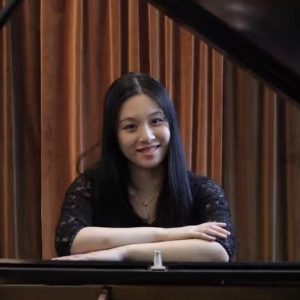
Jasmine Henry
Project: Theorizing the Digital Audio Workstation
The digital audio workstation (DAW) is the dominant tool for making popular music today, yet it remains undertheorized within musicology and music theory. Programs like FL Studio, Logic Pro, and Ableton embed complex forms of musical reasoning—structured by versioning, iteration, layering, and constraint—that existing analytical frameworks fail to adequately register. This project argues that the DAW is not a technical supplement but a primary site of musical thought, where composition, performance, and analysis converge. By developing new pedagogical and theoretical approaches centered on DAW-based practice, this work updates musicology’s analytic frameworks for twenty-first-century musical conditions.
Jasmine Henry (she/her) is an assistant professor of musicology and Africana studies at the University of Pennsylvania whose research examines how music, race, place, and technology intersect. Her current work analyzes Black club music and DIY cultural production in Newark, showing how DJs and dancers develop practices that articulate Black cultural politics, local knowledge, and pragmatic world-building.

Laine Gruver
Project: A Theory of Leitmotivic Agency
Laine Gruver’s project is an article, preliminarily called “A Theory of Leitmotivic Agency,” in which she theorizes how leitmotifs encompass both virtual agency that emerges through their musical structure and diegetic agency through their narrative associations. Through analyzing leitmotifs from contemporary television, film, and video game scores, she argues that leitmotifs musically mimic agential qualities of the characters or ideas with which they are associated. This mimicking primarily happens through four fluid categories: vocality, gesture, goal-direction, and topic/style. Applying these categories as analytical lenses clarifies how leitmotifs embody both virtual and diegetic agency, engendering rich and nuanced interpretations of leitmotivic function.
Laine Gruver is a fifth-year PhD candidate in Music Theory and Cognition at Northwestern University, where her dissertation explores the interactions of leitmotifs and agency in Ramin Djawadi’s music for HBO’s Game of Thrones. Synthesizing existing theories of musical agency with scholarship on screen leitmotifs, Laine’s research provides a theory of leitmotivic agency that accounts for both the virtual agency that emerges through leitmotivic structure and the diegetic agency present in narrative associations. She has presented this work at conferences including Music Theory Midwest, Music and the Moving Image, and the Society for Music Theory.
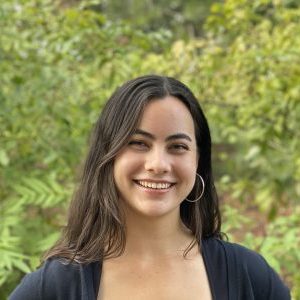
Eva (Yi) Yang
Project: Buddhist Popular Music: Sounding Buddhist Modernism in Contemporary Taiwan
In recent years, musical works inspired by Buddhist philosophy, doctrine, and practice have proliferated across popular genres in Asia. Yang uses the term “Buddhist popular music” to describe this emergent field. This project examines Buddhist music festivals and performances in Taiwan by monastic communities and by commercial groups centered on electronic Buddhist music. It addresses two primary questions: how participants from different Buddhist traditions and secular pop-music scenes interact to produce new forms of expression, and, perhaps more importantly, if and how these sonic practices rework identity through sound rather than through doctrinal authority or secular boundaries.
Eva (Yi) Yang is a PhD Candidate in Ethnomusicology at Wesleyan University and hold an M.A. from the Eastman School of Music. Yang’s research focuses on Buddhist popular music in the Sinophone world. Her training in multiple musical traditions, including pipe organ and Chinese instruments, informs her ethnomusicological approach.